
Seminole County Court Record Requests
Every Seminole County court case record search starts with custody. Earlene Bramlett, Clerk of Superior Court, handles Superior, Juvenile, and Magistrate records. For Superior Court files online, Georgia Courts E-Access points users to PeachCourt, an account-based provider. Probate records and minutes stay with the Probate Court office. Donalsonville Municipal Court records belong to its municipal clerk. There is no single portal for every court.
Match the channel to the file. PeachCourt can give electronic Superior Court access. The clerk works at the counter, by phone, by mail, or by email. A written request is useful. Scope, cost, and the basis for any withheld material must be clear. State guidance allows an oral request too. But enforcement under the Georgia Open Records Act, it explains, depends on a written request.
- Identify the court, case type, party role, and filing or hearing date range.
- Give the case number when known and name the exact docket register, order, judgment, motion, or filing.
- Choose online access, the clerk counter, phone, email, or a mailed written request.
- State whether an electronic, paper, redacted, or certified copy is required.
- Ask for a cost estimate and delivery time before work begins.
Seminole Clerk Routes by Court
The clerk map prevents a common delay. The GSCCCA profile lists Superior, Juvenile, and Magistrate courts under Clerk Earlene Bramlett. It also lists jury management, passports, notary service, military discharges, and the Board of Equalization. Those services are not all court dockets. The profile is an office directory. It is a custody clue, not a case search result.
Seminole County Clerk of Superior Court
200 South Knox Avenue
Donalsonville, GA 39845
Mail: P.O. Box 672
229-524-2525
Fax: 229-524-8883
Monday-Friday, 8:00 a.m.-5:00 p.m.
Juvenile matters need an access-eligibility check before details or images are requested. For Magistrate cases, the Superior clerk route can locate the file, while the Magistrate office answers local procedure and calendar questions. The two offices should not be assumed to offer identical access.
Kinds of Court Records
What a Seminole County court record holds depends on the court. Superior files include civil and criminal cases. The clerk profile also covers Juvenile and Magistrate files. Probate keeps records and minutes, estates and wills, marriage-license records, warrants and commitment matters, and county traffic cases. Donalsonville keeps a separate municipal ticket record.
- Docket sheets and chronological event registers
- Complaints, petitions, answers, motions, and returns of service
- Signed orders, judgments, sentences, and final dispositions
- Probate minutes, estate papers, wills, and marriage-license copies
- Public exhibits and attachments when access is permitted
- Municipal citation records held by Donalsonville Municipal Court
A blank form is not a filed court record. The Pataula Judicial Circuit forms inventory includes case filing and disposition forms, domestic forms, and other packets, but warns that forms can become outdated. It can help you name a document. The clerk-held filed copy remains the record of what occurred in a case.
Seminole Probate Records Stay Separate
The Probate Court route deserves its own check. Its county page describes public records and minutes. It also covers estate and will administration, funds for missing heirs and minors, marriage licenses and certified copies, permits, warrants, commitment hearings, and traffic, game, and fish cases. PeachCourt serves Superior Court. Do not assume it holds these records.
Address the request to the Probate Court office unless that office names another custodian. Give the estate, license, warrant, or citation category. Ask whether a public copy can be released. The official page names Judge Michael Jon Rogerson but lists no separate probate-clerk name. Using the office title keeps the request from landing with the wrong person.
Court Records: What They Contain
A Seminole County court record can join the docket index to the papers behind it. Exact fields vary, and no official Seminole sample case or local number pattern is published. Treat each displayed label as a field, not as a conclusion about the case.
| Court and case number | The court division and strongest stable identifier; no local format should be guessed. |
|---|---|
| Case type and roles | Civil, criminal, probate, traffic, or other category with plaintiff, defendant, petitioner, or respondent roles. |
| Docket sheet | A date-ordered register of filings, settings, orders, and case events. |
| Filed documents | Pleadings, motions, answers, returns, orders, judgments, and any public attachments. |
| Setting and disposition | Hearing date, event type, status, plea, dismissal, judgment, sentence, or final order when shown. |
| Access marker | Public, redacted, restricted, sealed, or unavailable as labeled by the custodian or provider. |
A docket entry in a Seminole County court record shows that an event was posted. It does not show the full text of the filing. When the actual ruling, request, or judgment matters, ask the clerk for the named document behind the entry.
Seminole Docket or Certified Copy
A portal screen, an ordinary copy, and a certified copy serve different needs. The docket is an index. A document image shows the filed paper. A certified copy adds the clerk's authentication, which downloading or printing a PeachCourt screen does not imply.
Quick answer: Tell the Seminole County custodian whether you want the docket register, a named filing, a plain copy, or a certified copy. These are different products.
For an entry such as “order filed,” be specific. Give the case number, entry date, and document name. Ask whether the clerk can send an electronic copy and whether a redacted public version exists. That wording narrows the search. It also avoids paying for a broad file when one order is enough.
Copy Fees and Certification
No official Seminole County source publishes a current court-certified-copy fee. Nor does one list accepted payment methods, mail turnaround, or a public-terminal rule. Confirm those amounts with the correct clerk. The Attorney General's general Open Records FAQ does publish limits. Those limits cover records handled under that Act. A judicial file, though, may instead be controlled by a court rule or another statute.
| Item | Verified Seminole information |
|---|---|
| Electronic or paper court copy | Ask the custodian for format, cost, and delivery method. |
| Certified court copy | Current local certification fee was not posted in reviewed sources. |
| Open-records paper copy | Up to 25 cents per page under the Attorney General FAQ where the Act applies. |
| Search and retrieval | First 15 minutes free; later work may use the lowest-paid qualified employee's rate where the Act applies. |
Ask for an estimate before the office begins a broad search or redaction review. State guidance favors electronic delivery where practical for computer-held public records. Do not rely on an old circuit fee form as a current Seminole County price.
Georgia Requests to Seminole Custodians
Put any written request in the hands of the office that keeps the record. Name the court. Give the case number if you have it. Add a date range and the exact document you want. Say which format you prefer. Ask the office to cite the statutory basis for anything it withholds. The Attorney General's request guidance explains why sending the request to the right custodian matters.
The Georgia Open Records Act sets a working rule. Under the official FAQ, responsive records should be produced within three business days. This applies absent exceptional circumstances. More time may be needed. The agency should then say when to expect production, estimate the cost, and name any exemption it is claiming. That deadline does not guarantee every judicial case paper follows the same track. So ask the clerk whether a court rule or the Act governs the specific Seminole County court case record you want.
For broader context, the state maintains an open-government landing page. It gathers request and access guidance in one place. The Georgia Attorney General open-government resource shows how the state presents that material.
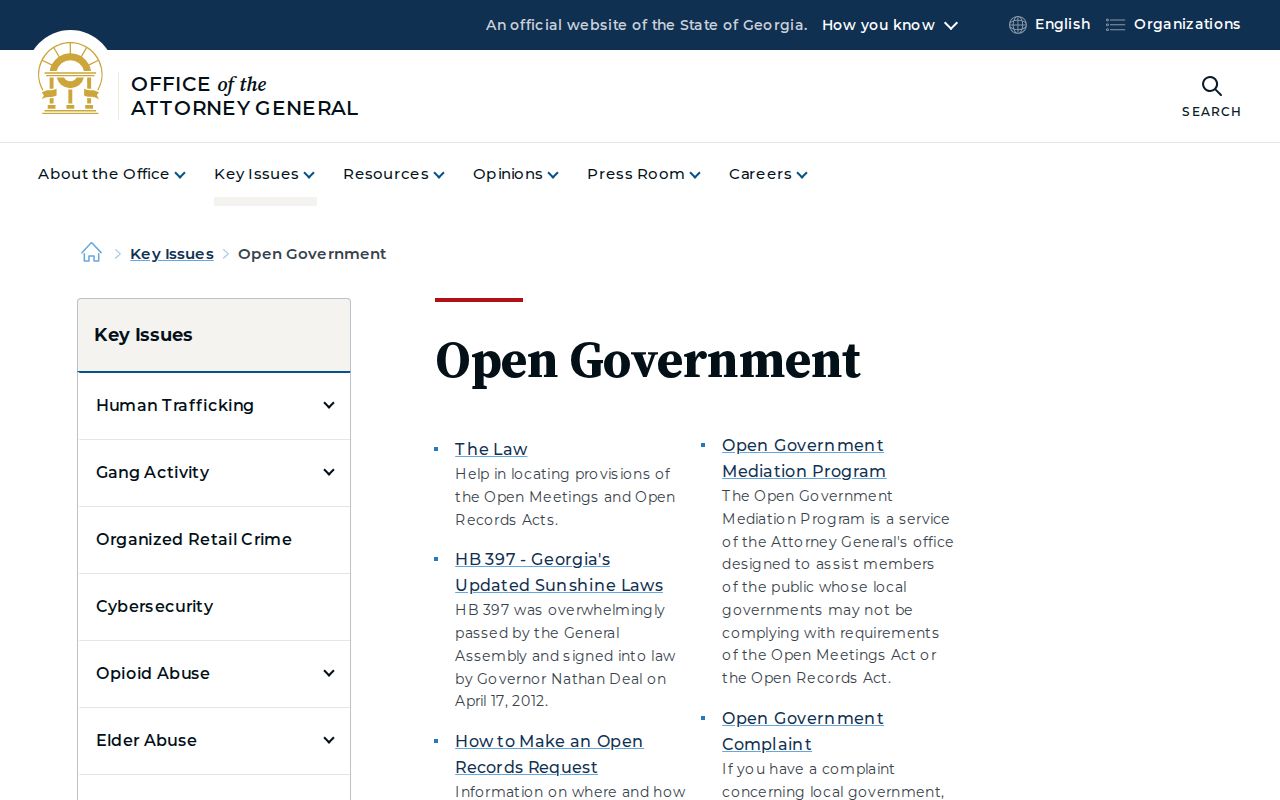
The state resource helps with the written-request route, but the Seminole clerk still decides which rule and fee apply to the actual court file. The official request-guidance page lays out the state's instructions step by step.
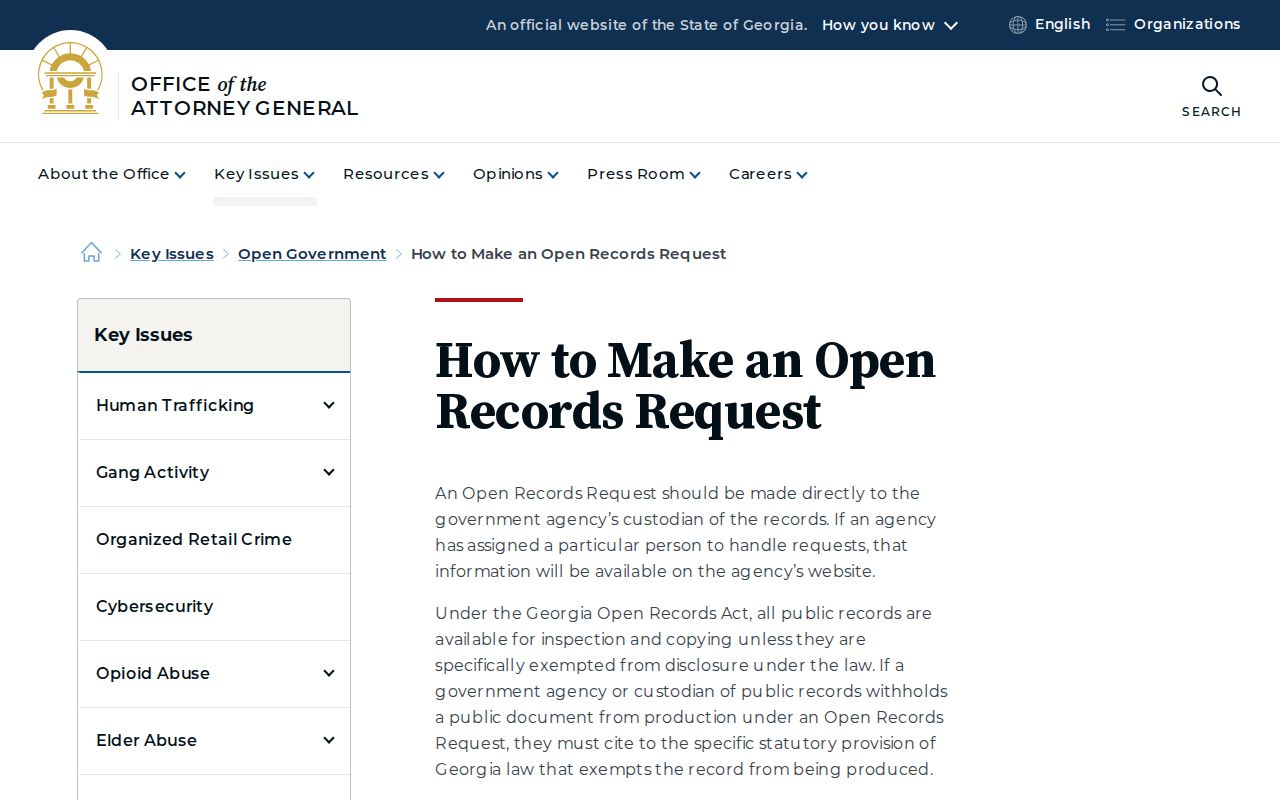
The practical lesson is simple: describe the record that already exists, with care. An office has no duty to build a new report or compilation just because someone asks for it.
Access Rules for Court Records
Public access is not unlimited access. A custodian may redact protected fields and release the rest. State guidance lists examples that can be withheld. These include Social Security numbers, medical and bank information, certain financial details, and protected home contact data. Juvenile, sealed, or otherwise restricted records call for a separate legal access check.
Georgia access rule: Under the Georgia Open Records Act guidance, an agency should cite the specific exemption used and should not reject an entire public record solely because part needs redaction.
A PeachCourt login wall reflects a provider condition, not proof that a case is sealed. A failed search can mean many things: the wrong court, the wrong provider, delayed indexing, restricted access, or search terms that fall short. Confirm real status with the clerk instead of reading a blank screen as an answer.
Federal Records Outside Seminole Courts
Federal cases arising from Seminole County never become Seminole County Superior Court files. They sit in the U.S. District Court for the Middle District of Georgia, with Seminole County listed in the Albany Division service area. The federal docket runs through PACER, and federal copies come from the federal clerk. The Middle District records-and-copies page marks that separate access route.
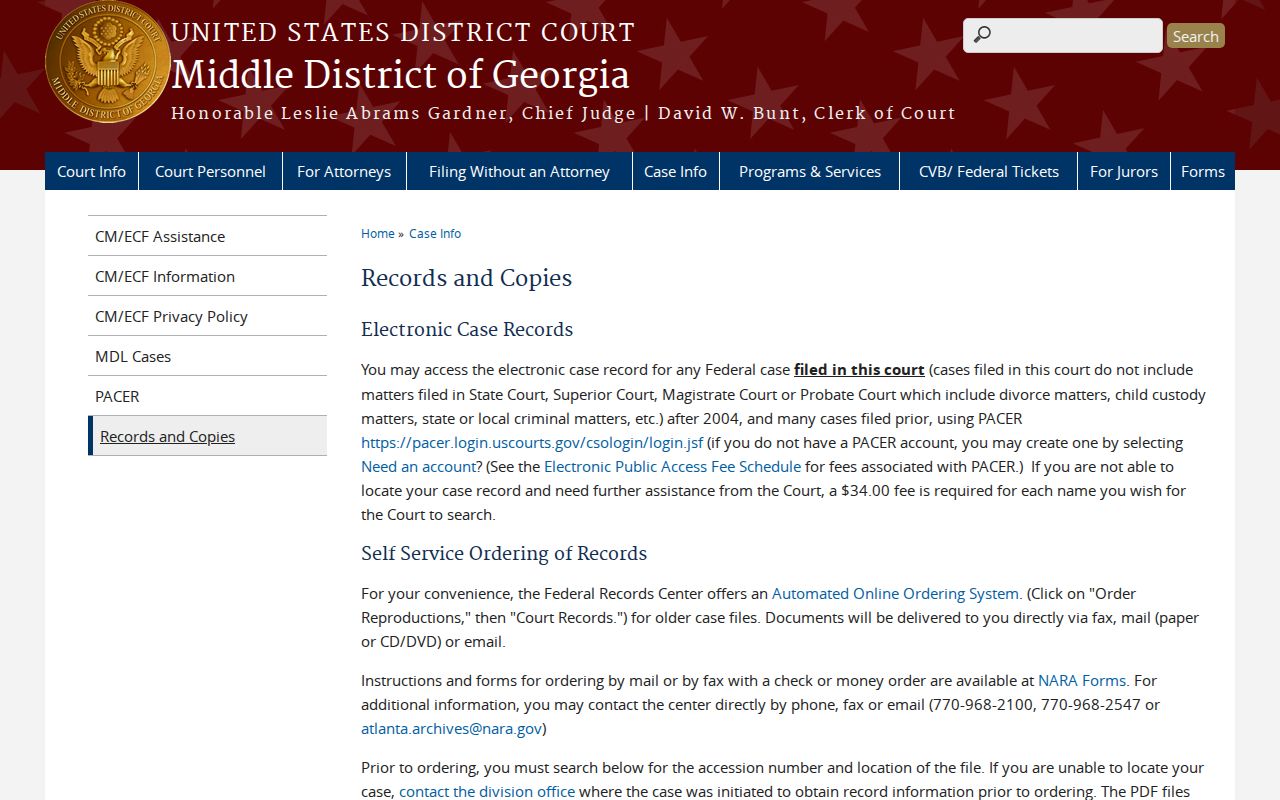
Use that route only for federal files. It cannot produce a Seminole Probate, Magistrate, Municipal, or Superior Court record. Appeals from federal district cases follow yet another path, and the Eleventh Circuit site is the federal appellate resource for it.
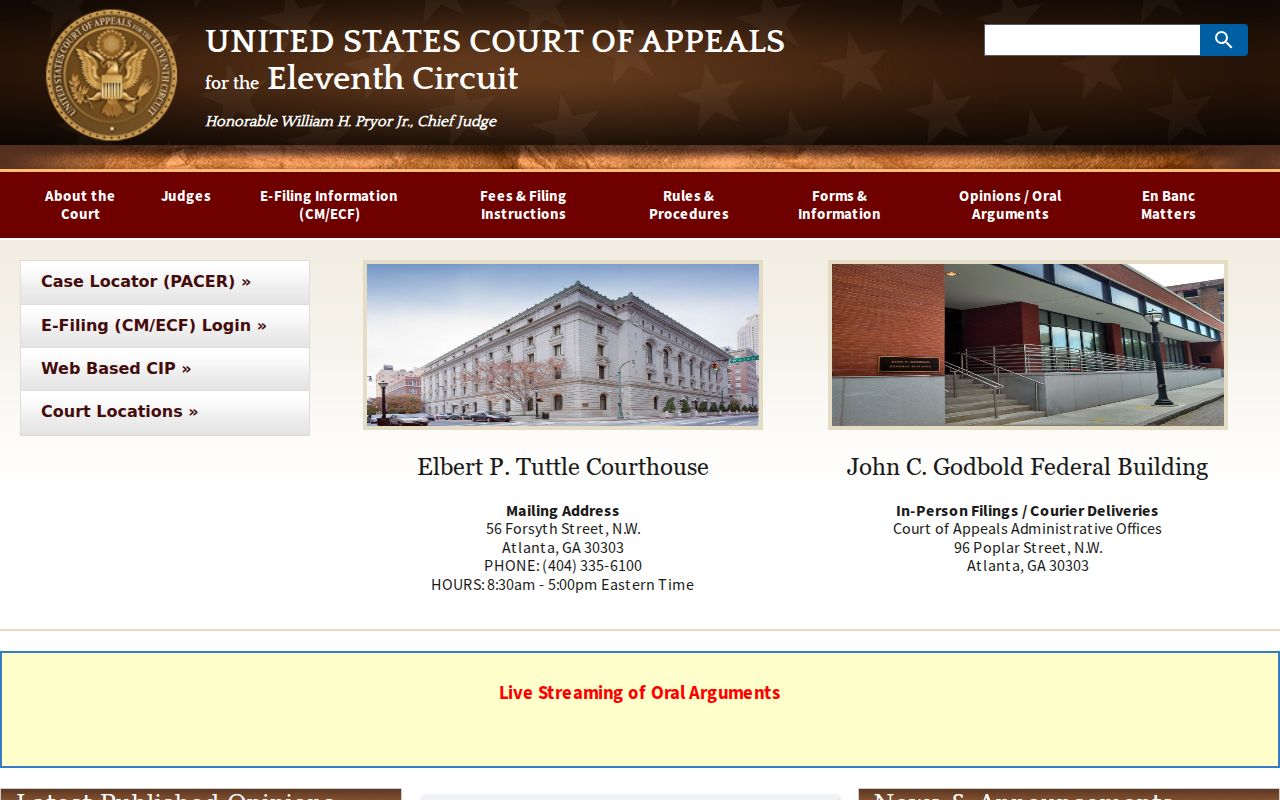
This federal boundary matters. County, district, and appellate clerks each hold different originals, and each certifies only the records of its own court.